 SOCIETY PROTOCOL
Abstract: Society Protocol introduces a distributed system of coordination as a solution to all the coordination problems plaguing modern civilization.
Introduction
Our civilization is at a crossroads. We are undergoing tremendous upheavals due to a macro failure in our coordination structures globally.
Western principles, which have led the world for centuries, are plainly failing and collapsing under the weight of rapid technological change.
Western principles are rooted in duplicated contracts, which enabled democratic governance and individualism—evolutionary methods of coordination that first emerged at the beginning of what we call the double-entry accounting age (DEAA), around year zero1 (in both CE/AD). All of the DEAA’s coordination methods are anchored in one fundamental innovation: duplicated contracts.
We are still coordinating using individualism and representative democratic systems, which emerged and were refined from ancient Greece and Rome2. While these systems were state of the art at the time (around two millenniums ago)—they no longer are. In the modern world, information pulses around the globe at nearly the speed of light, but we aren’t able to coordinate effectively using all this information because our State structures remain fragmented—rooted in a different age.
The Problem of Coordination
This failure of coordination is rooted in the nature of duplicated contracts. Their fragmented nature, makes them naturally end up accumulating the state of society into a hub-and-spoke model, where centralized hubs3 hold together the realm using a patchwork of accumulated duplicated contracts.
In the modern age, at the technological speeds of today, this aggregates all the fragmented state of society into the hands of very few elites.
“He who controls the state, controls the State.” –Excerpt from The state of The State
This top-down control has driven every democratic system and individualism to the breaking point, because of the imbalanced power dynamics it creates.
Top-down elites are shaping all of society it in their image—using all the data and power accumulated, while democracy and individualism in practice remains only a veneer. This in practice makes our societies function like a numb organism. That numb organism can’t make good decisions as a societal structure, because it can’t feel itself. The elites can only see what is going on in the entire societal state by owning it, but they cannot feel it. As a result, it’s as if our societies are high—strung out on opioids all the time—stumbling around the hallways, falling down flights of stairs, and we’re the organism’s cells getting destroyed. This ultimately amounts to a numb and lifeless societies.
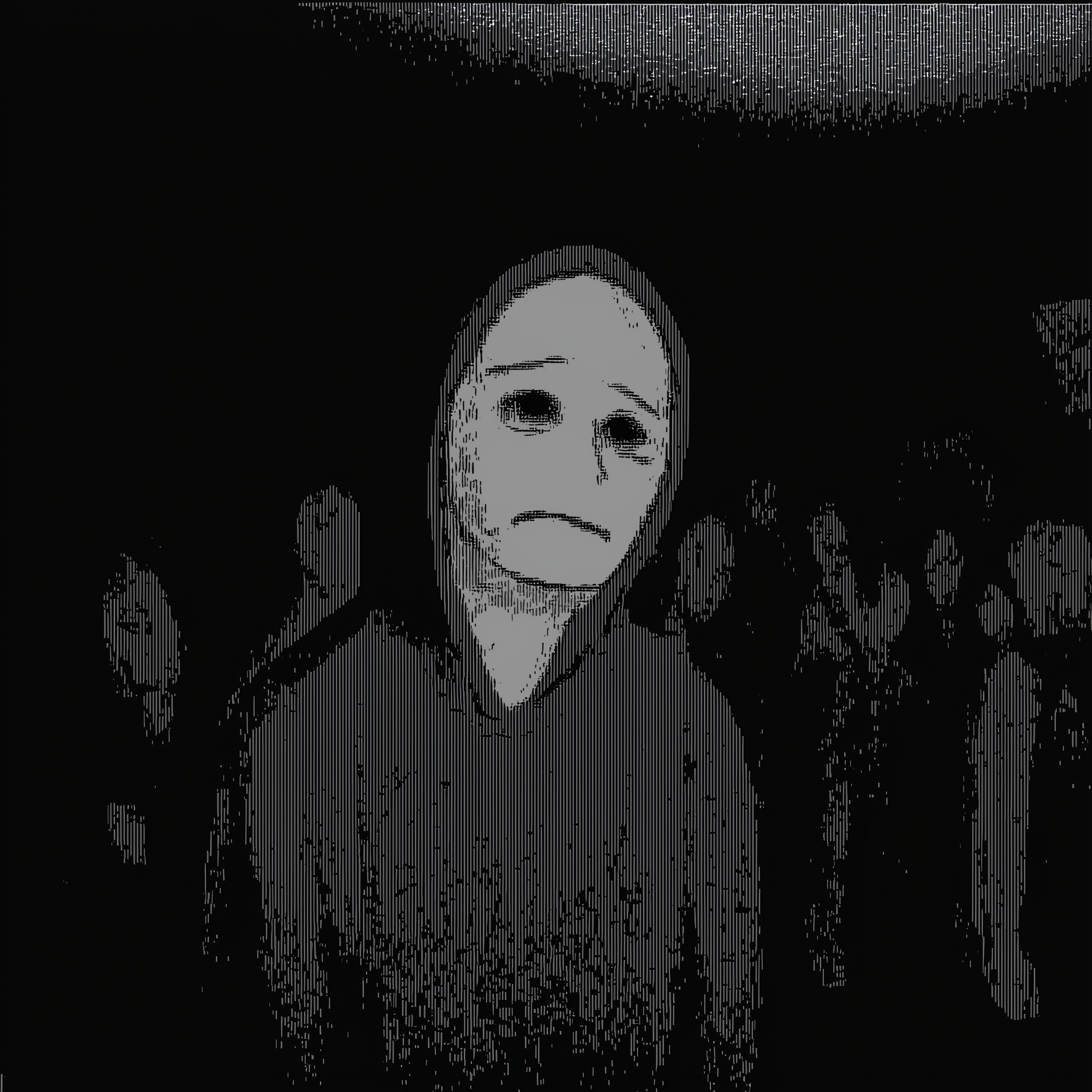 This disalignment causes fractures in our societal organizational structures and limits humanity from coordinating efficiently.
The current situation we face is a crisis of coordination. Just about every system isn’t working optimally. The centralization of infrastructure, and therefore power, isn’t allowing humanity to progress to a new age.
This disalignment is causing fractures in all of our societal organizational structures: our identities, monetary systems, state tracking, time (synchronization) structures, shared realities, governance capabilities, value systems, and social contracts. None of them are working as intended. Everything is dualistic and fake. The news don’t produce the news, the money doesn’t represent accurate value to society, the politicians don’t represent the people. The populace isn’t able to coordinate because the shared reality mechanisms are controlled by entities who must (are incentivized to) keep everyone divided (in order for the rulers to maintain power)—unable to form into a unified shared reality.
All eight pillars of society are currently fragmented and perverted.
The Eight Pillars of Coordination (Problems)
Identity
Individuals lack sovereign ownership over their own identities, assets, and data. Pieces of our identity are scattered across a litany of corporate and Nation State databases, who have ownership and control of this data, with the individual themselves always receiving the subordinate duplicated copy4.
The power for your identity to interoperate with the rest of the system is retained by feudal lords, who cannot feel your interests or have them at heart.
The systems fragmentation causes individual’s identities themselves to also fragment in real-life situations. (Individuals don’t have one coherent identity in this age; they often split personalities and identities opportunistically in various situations.)
Monetary
The monetary systems underpinning modern civilization suffer from a critical fundamental structural flaw: those who control the flows of value—the bankers and financial institutions—occupy a dual role as both infrastructure providers and active players in the economic game. This creates an irreparable and imbalanced conflict of interest where private entities controlling society's monetary mechanism (monetary capital) both control the value flows of society, and are incentivized to maximize their own gains regardless of societal cost.
The result is a system of privatized profits and socialized losses, where bankers and financial institutions reap enormous rewards during boom periods, yet when their behavior leads to crisis, the burden falls upon the broader population and causes economic devastation. This dynamic repeats cyclically—roughly every 75 years, the accumulated distortions become unsustainable, culminating in wars and societal upheaval which allow the financial class to consolidate power and reset the system once again in their favor. This parasitic relationship fundamentally breaks the democratic social contract, as an alliance between banking institutions and ruling political parties creates a separate tier of power above the supposed equality of citizens.
Beyond the moral hazard, these centralized monetary systems are profoundly inefficient at their stated purpose: accurately representing value to society. When a small number of entities control the gravitational center of all value flows, they inevitably distort the entire economic landscape around their own interests and perceptions. The money supply, credit allocation, and price signals—which should reflect the distributed knowledge and preferences of society—instead reflect the concentrated biases and profit motives of central hub players. Yet Nation States remain trapped in this arrangement because they cannot facilitate the coordination of value flows or incentives at scale without banks. The bankers are what keep the fragmented monetary system together…and the periodic wars causing mass devastation are the cost of doing business and their service.
The tragedy is that the very tool we require for storing, measuring, and transferring value has been captured by entities whose incentives are fundamentally misaligned with societal flourishing. This vicious cycle is much like a noose, where the more society depends on banking for its coordination, the more power accrues to the bankers who control it, and the further the system drifts from actually representing value creation and flows accurately.
societal state
Societies can be fundamentally viewed as state machines. In order to exist, they must keep track of the state (status) of participants (roles, identities, property rights, monetary value, organizations, governance decisions, opinions, acquired knowledge, etc…). We cannot have a society without keeping track of the state.
Today, our state tracking systems are fragmented_._ Rooted in duplicated contracts, they don’t have a way to aggregate into one unified state machine. Each piece of state is separate, and (often) incongruent from each other piece that makes up the fabric of our histories and realities. As a result, our societal state is fractured, and the reality it creates is jagged, and rife with duplicates and misinformation (with a patchwork of duplicated contracts often disagreeing at the edges of where they meet, or conflicting and fighting for dominance about which information is accurate).
Additionally, this jagged reality isn’t distributed equally…it’s stored in data centers and, like all other fragmented systems of the DEAA, leads to the same pair of shadowy hands, with their own interests, manipulating the status of our societies. These shadowy hands are both participants in the game and infrastructure for society (it’s all the same problem in the DEAA).
As a result, our state tracking is jagged and isn’t accurate. Our histories aren’t real (we don’t know how unreal they are), and all our pieces of state can easily be censored, or removed entirely from the societal state, by those who control the centralized state storage (data centers)—who have their own individual unaligned competitive interests with the people whose state they’re editing, censoring, or removing.
Pretty tough to do democracy and individualism under such conditions…eh?? 🤣
Synchronization (Time)
Our time is very 1-Dimensional; we’re only synchronizing together on one integer. Now, this doesn’t sound like much of a problem…until you realize the synchronization that we’re potentially capable of with modern technology, and leaking in potential…which is essentially all of the societal public state.
The clocks we use for synchronization aren’t themselves centralized, it’s more that: the 1-Dimensional nature we use to synchronize changes the nature of time itself. Rather than synchronizing around identities, monetary value, societal state, world events, relationships, governance decisions, etc…the time itself is limited to only one dimension, an integer on a clock.
The lack of synchronization at multiple dimensions is what causes the fragmentation itself. Fragmented identities, value systems, monetary systems, governance, state tracking, events, and social contracts.
Our realities are jagged at the edges at not synchronized, so the only way we can measure time, is around a single digit synchronized around the sun ⌚. This creates a very uniform society, we all (mostly) use the same dimension, work the same hours (9–5), eat lunch at the same time, watch sports at the same time. Our societies are entirely synchronized around the sun, whereas it should really only be one factor.
Shared Reality (Events)
Our shared realities are fragmented. As a result, we again become reliant on centralized hubs to store and create a patchwork shared reality of all the events occurring in society. Every fragmented interaction runs through these centralized hubs…with their eyes influencing the shared reality created by merely observing individuals attached to them. You see…it’s a quantum shared reality. Big Brother is watching you!
These hubs don't merely transmit our shared reality—they actively reshape it. Each hub sees everything flowing through its network, wielding god-like informational powers while presenting a curated version of reality to its participants. The State isn't just watching you; it's manufacturing reality.
These centralized entities control what you see, what reaches your feed, and which voices get amplified and which get suppressed. They effectively write the narrative of our collective reality in their own image. They serve as both: participants in the game and infrastructure, and have perverse incentives to distort the shared reality and maximize their own profits.
Without a unified, synchronized record of events, we have no way to verify what's actually happening in our societies. There is no verifiable, non-manipulated way to see the events occurring in the shared reality, presently and in the past, and the identities of individuals who are creating the events aren’t visible either. Information degrades like a game of telephone, except the telephone operators have their own secret agendas, and the power to rewrite messages for every participant.
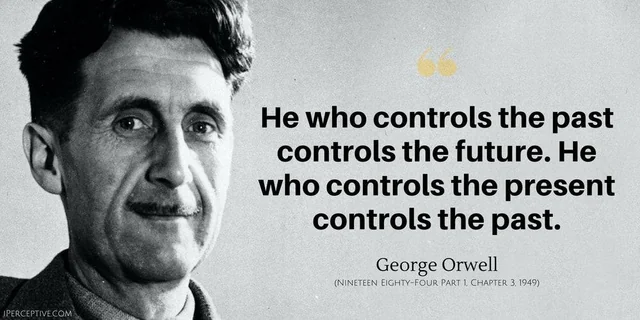 The tragedy is that everyone knows this system is broken. We all feel the manipulation, the surveillance, the loss of agency. Yet, we remain trapped because these centralized hubs have become the only remaining Schelling points capable of coordinating any widespread shared reality at all.
The hubs holding events meant to connect us into a shared reality, have become our jailers, with perverse incentives to keep us divided and dependent.
Governance (Group Decision-Making)
Political systems have been captured and representative democracy no longer represents the will of the populace. The hub and spoke model is able to centralize all political decision-making using its power above the powerless people, by simply capturing key positions, the levers of decision-making, while barring any subsequent recourse by not allowing direct or liquid democracies to form.
This makes decision-making not in the best interests of a society, but rather in the interests of a very narrow range of individuals, who have overwhelming power and are essentially living in the “heart” of this numb body of a society. They’re the only ones whose opinions and perceptions matter, because they live in the heart.
The irony is that while their power is impressive…elites themselves must embody the characteristics of a child trapped inside of a numb sociopathic body to survive in their dangerous sociopathic battle for power at the highest levels. They are themselves suffering just as much inside, and probably more even, as the society they have produced (which is numbed out due to being unable to make decisions).
Cultural Artifacts (Social Contract)
Our societal artifacts, such as the US Constitution or the UN Charter, sound good on paper but are not adhered to. They are merely words—interpreted subjectively, written dualistically, and not abided by—because they aren’t tied to any objective metrics.
Every pair of subjective judging eyes that comes across these fragmented artifacts interprets them differently. The people attached to these eyes often have perverse incentives and act in dualistic ways. As a result, these cultural artifacts can’t cohesively stand for anything or fulfill their intended purpose.
The problem is again fragmentation. Our fragmented social contract…doesn’t actually exist anywhere. It’s fragmented, opaque, manipulated, and illusionary—applying differently to each situation based off the ever-changing individual interests of the people involved in that particular room and decision.
One day, we may wake up to a strange scenario. The judges that be may tell us that the democratic social contract wasn’t actually ever real at all. That it was our imagination based of how we perceived the social contract. That this former social contract was merely some misunderstood of words on paper, and a new one will have to be drafted and interpreted by the powers that be to replace it. The new one will be legitimate for sure, as the words will make sure that legitimacy is included this time as a core tenet.
The problem is that the social contract on paper, and the actual social contract of lived experiences in all modern societal systems are worlds apart.
Value Systems
Our value systems—the fundamental rules determining what societies reward and punish—have evolved slowly over thousands of years.
Each generation has inherited value systems designed with the limitations of worlds that no longer exist, and battles that are no longer relevant. Recently, more-so than ever. We are living in a world upended by tremendous technological change. Yet, our value systems are still designed for a world where information was very difficult to transfer, fragmented, and values were impossible to synchronize.
An example of this would be religious tenets, which form the basis of much of the world’s value systems. The reason religious tenets are so simple, is because information was incredibly difficult to transfer without divergences.
It was almost impossible to agree upon a new change in a tenet. Any complexity added to these classical tenets would be nearly impossible to propagate through the system. Complexity would get lost and mutated as it traveled through the system.
Our current value systems are fragmented, and cannot accurately measure what we actually value as societies, because they are entangled with baggage and designed for a world where information couldn’t travel…where humans couldn’t come to instantaneous consensus about decisions…a world without computation where impacts to the value system couldn’t be tracked and stored accurately. Without computation, our value systems had to remain so simple that they could accurately propagate. That is no longer the case. The world has changed.
The nature of our value systems themselves, reflects a reality which no longer exists. It prevents us from appropriately measuring value in the modern age. We live in an entirely different world, but our value systems are unable to evolve. In a world upended by technology, where the potential capabilities of value systems are entirely different…our capabilities are now: forming complex algorithmic value systems, coming to a consensus on them (making group decisions at worldwide scale), and synchronizing the entire computational state and consequences of it all together. It’s way past “do not kill” and “do not steal.”
Yet, we’re not actually using the capabilities of these new value systems because of the same numbness in society’s decision-making and fragmentation.
Value systems form the basis for our incentive structures. As a result, the incentive structures we’re witnessing in society are inadequate. They are not accurately fueling the rise of the best, most valuable people to the top of the societal pyramid, nor able to spur individual/collective action in a way that makes our societies better.
Since they are controlled by so few people, just like every other system, our value systems have become inverted. Incentive structures are poorly designed and easy to take advantage of, creating exploitable systems of allocating resources which are constantly gamed by bad actors. This inversion in our value systems has placed some of the absolute worst actors in society into the top echelons of power.
.png)
The Times Are Dark And Getting Darker
We are entering truly dark times. If these societal pillar breakdowns are not addressed, the projected impact is: societal collapse and humanity is not certain to survive.
While I do believe in our sociopathic feudal overlords to not destroy all of humanity (only most of it), who knows 🤷♂️. It’s easy to push the wrong button and activate something as deadly as a nuclear holocaust (Samson option) or AI mass extermination in a societal body as numb as the current one, and in an equilibrium so dangerously tense and fragile.
Okay…so let’s look at the best case scenario…let’s not dwell on the bad sides.
The best case scenario…if we remain in these systems, is that they naturally evolve into a new techno-feudal order driven by access to technology (compute, AI, CBDC). During the transition, devastating wars for control wipe out much of humanity, and afterwards a global techno-feudal government establishes a new order of servitude. An extremely hellish condition under which to exist for the vast majority of the planet. The same numb societal body persists. Dregs and sleeping zombies walk the earth, programmed with neural chips, to fulfill the duties of serfs (which have coincidentally lost most of their value because AI removes their requirement for existence), and hence must be culled5.
Every step we take further down this path tightens the noose around humanity’s neck, pushing us closer to this precipice.
We, as humanity, need to address the root cause. The systems we use for coordination are what’s failing us. We must learn to coordinate more efficiently, if we are to exit this trajectory—evolving the human condition and improve the quality of life. A breakthrough in coordination technology would allow for: larger population sizes without depleting all the scarce resources, less catastrophic wars, longer lifespans, no tyranny, more prosperity all around, more valuable interpersonal relationships, and overall a greater human quality of life.
There is no possible solutions to any of these issues without the decentralization of power (society remains a numb organism). The more centralized we get as a society, the more numb and lifeless our collective organism becomes (and we’re just the majority of cells on this organism as it wanders around the cityscape stumbling into train tracks and falling down flights of stairs).
Seeing the entire state of society is not the same as feeling the entire state of society.
The key to making society a vibrant organism again is a decentralization of power. It’s the only thing which can return feeling to the nerve cells all throughout the organism. Decentralization of power is the prerequisite to making all of humanity illuminated as one vibrant alive organism.
The Complication: Blockchains
Recently, a movement to decentralize power has emerged—initially from the ideas of Satoshi Nakamoto in Bitcoin (Satoshi Nakamoto, 2008), and Vitalik Buterin in Ethereum (Buterin, 2014). The people rallied behind them, but quickly realized that the systematic flaws in these systems make them unable to truly decentralize power back to the hands of the people, and allow them to coordinate in a meaningful way.
.png) Due to their inability to create sybil-resistant identities, these systems became dominated by cabals of insiders. This lack of real identity (identity pillar), translated to a lack of governance (governance pillar), and ultimately the inability to adjust their monetary policy (monetary pillar) and value systems (value system pillar).
Due to their inability to create sybil-resistant identities, these systems became dominated by cabals of insiders. This lack of real identity (identity pillar), translated to a lack of governance (governance pillar), and ultimately the inability to adjust their monetary policy (monetary pillar) and value systems (value system pillar).
This incomplete foundation forced their economic models into pyramids, with a lack of rebalancing functionality. Without identity systems, the same oligarchic crypto cabals which have ruled the DEAA are required to emerge as a prerequisite to coordinate them at the social layer. More information about this can be found in Fake Everything.
While these networks may be valuable, and are surely breakthroughs without which Society Protocol would be impossible6…they cannot solve the problems of decentralization or coordination for humanity. These are triple-entry-accounting age (TEAA) systems, which are still rooted in double-entry accounting age (DEAA) principles, limitations, and ways of thinking…where value is viewed as “static objects,” and each interaction is separate from the whole state7…because that is how it has always been done in the past.
The Solution: Society Protocol
The current existential crisis we face as a species is actually an opportunity to enter a new epoch of human civilization. The Age of Synchronicity, aka the triple-entry accounting age (TEAA) aka the Age of Aquarius.
To enter the TEAA, we will need to take advantage of opportunities available to us, which weren’t possible before. Namely, we need to untether ourselves from the past assumptions and limitations of doing things based in a root of fragmented duplicated contracts. Then, we can reason from first-principles about how we can coordinate using the root of a unified Synchronized Social Contract (SSC), which is synchronized as a reality between all participants.
“Perfection is achieved, not when there is nothing more to add, but when there is nothing left to take away.”
–Antoine de Saint-Exupéry
Society Protocol introduces a distributed system for coordinating collectives in a more efficient manner. It presents a solution to all eight pillars of coordination by using a state machine to coordinate any collective of entities (humans, robots, AI) worldwide in a radically more efficient way—forming a Synchronized State—the evolution of the Nation State. This is accomplished by synchronizing a shared state worldwide and using economic principles to incentivize each Individual Actor’s game theory optimal (GTO) decisions to align closer with the optimal decision for the collective as a whole.
Synchronized States
As opposed to the numb and sluggish Nation State model (where every duplicated contract is fragmented, and ultimately leads to the same pair of shadowy hands), in the new paradigm of Synchronized States, this pattern inverts. All eight pillars are unified into one system, while simultaneously decentralizing the power and control of the system to all participants equally—giving every participant true agency, freedom, and equal access. The Synchronized State is alive and vibrant, it is reflexive to the feelings of all its parts and edges with a great deal of sensitivity. It moves as one. Society Protocol is kind-of like a living organism where every entity is a cell.
 The primary innovation of the Synchronized State is in synchronizing a shared reality (consensus of time) in multiple dimensions simultaneously. That’s what unlocks everything else. By combining four-dimensions of synchronization into one ledger, Society Protocol combines the clock and all the functions of the State into one duplicated computer program. The Synchronized State can fulfill all the functions of a State, but it functions with the synchronized precision of a clock. A State structure which functions with the precision of the clock has always been an impossible dream—an ideal which sovereigns would aspire to, but here it actually becomes a reality.
At the current point in human evolution, it is easy for civilization to create both vertical and horizontal hierarchy States (Classical States and Nation States). However, they’re not efficient coordination structures without synchronization. All the fragmentation impedes their ability to coordinate their constituents, and ends up centralizing power to a handful of powerful sources. As we mentioned earlier, the prerequisite to solving every one of today’s gruesome coordination problems is decentralization. So…if fragmentation paradoxically requires centralization for coordination…then what we need is synchronization (the opposite of fragmentation) to enable decentralization. Therefore, the answer to our current coordination predicament is in synchronization enabling decentralization.
For more information about Synchronized States, you can read this article: Synchronized States (The Golden Record).
Rebalancing Pyramids
Ultimately, the purpose of Society Protocol is to coordinate collectives in a more optimal manner. Society Protocol layers on top of other systems of coordination to make coordinating a collective easier and more efficient. It does not remove other systems of coordination such as rituals (ZEAA), vertical hierarchies (SEAA), or horizontal hierarchies (DEAA)—it synchronizes them all.
Coordination is a tricky concept. The premise is that all participants have their own individual interests, and combining them with the collective interests is outside the power or intention of any singular individual participants. That is why we naturally fail to coordinate optimally as a species, because every participant is both competing and cooperating at the same time. This makes all individual participants incapable of forming the optimal social contracts for the group. Society Protocol resolves this problem by forming a Synchronized Social Contract (SSC) which is agreed upon and controlled by the collective transparently. By computationally synchronizing a social contract, Society Protocol is able to achieve what no individual participant can accomplish: to combine each individual’s interests with those of the entire collective. The system amazingly accomplishes all of this automatically, by using economic incentives embedded in algorithms and computation, requiring near zero human effort or upkeep, at a global scale. This creates an effect we like to call rebalancing pyramids, where the societal status hierarchy is automatically rebalanced based on the rules of the SSC.
The SSC paradoxically allows for tribal cohesion while enabling the maximum amount of individual agency, equal rights, privacy, and freedom possible in the modern world8.
Society Protocol does not fundamentally attempt to change human nature to accomplish coordination. It takes generalizations of all the routine actions we engage in as participants in society, such as: parenting, governance, organizations, and property rights, and attaches a system of events logging and optimized economic incentives to them—creating a digital twin identity which functions in a synchronized reality.
For more information about coordination, you can read this article: Rebalancing Pyramids (Coordination).
The Age of Synchronicity
What is the vision? What does this all mean? Where does it all get us? Ultimately, it gets us to the Age of Synchronicity. Society Protocol solves the problem of inefficient and fragmented coordination mechanisms, and opens the door to a new epoch of human civilization—the triple-entry accounting age (TEAA). In the TEAA, everything is rooted in the SSC, rather than in duplicated contracts. All the fragmented systems become unified, resulting in:
- Entire civilizations move as one
- All parties have equal rights and direct access to the social contract
- The power is decentralized
- The social contract itself is unified and unexploitable9 for any individual or small cabal
Society Protocol returns the vibrancy to civilization by giving all the edges—(the various cells in our civilizational body)—direct and synchronized access to participate and interact in the Synchronized State. This creates vibrancy.
The Age of Synchronicity is an age of verifiability, rich trustful interactions, accurate historical tracing, incredibly low bureaucratic costs, refined virtuous identities, and vibrancy. All the vibrancy that’s currently being drained from the populace by the small cabals returns, more-so than ever before, and the whole civilization becomes illuminated.
As individual freedom increases, every identity becomes more refined and vibrant.
I believe the genuine inner child of people will be able to come out more with the web of trust constantly present and properly aligned incentives.
Increasing freedom and lowering bureaucratic costs will free the current underclass of society to pursue more valuable and meaningful activities.
Race, gender, color, and creed will become far less relevant as organizing principles of coordination. All participants in a Synchronized State will become identified by their pseudonymous identity and avatars—making their physical characteristics matter far less as organizing principles.
Civilization will become able to control AGI in an equitable manner as a whole. A metaverse will form where we can all interact using our verifiable identities. Individuals will be able to see, perceive and manipulate the waveforms flowing through reality itself using advanced technology.
Look, the benefits are too many to name. I can’t name them all in this whitepaper. We also can’t currently perceive them all…they’re actually beyond our imaginations. As amazing as the benefits seem…it’s a waste of time to list them here. Before we can enter the Age of Synchronicity; we must solve these eight pillars.
The Eight Pillars of Coordination (Solutions)
Society Protocol (SP) is a dynamic programmable world which consists of eight elements, which solve all eight pillars of coordination and unify them all into one complete system10.
.png) Together, they combine to form a Synchronized State.
Together, they combine to form a Synchronized State.
Each element will provide a brief overview of how we currently do things in the DEAA of Nation States, followed by the solutions present in Society Protocol.
Accounts (Identity system of TEAA)
Identity of DEAA: All of our identities are secured by fragmented duplicated contracts belonging to governments and corporations. Their ownership and control of these documents allows them to manipulate, alter, statistically analyze, reposition, and kill our identities (and us).
Identities in Society Protocol are called Actors, and are secured by cryptographic keys belonging to their owners. Only an account’s owner and their delegates can access and verifiably sign Events (interactions) using their identity, by directly accessing the SSC. Absolutely no centralized intermediaries retain access to others’ identities, assets, or data. The only other entity which can touch or alter the identities of Actors (in a transparent way) is the Governance of the Synchronized State.
Society Protocol returns the ownership of all Actors' identities, assets, and data back to the custody of their rightful owners as bearer assets.
Every Actor is an account with a unique identity, with a unique Lifeline—starting at the Birth Event and ending at their Death Event. No two Actor’s identities are the same, the sybil-resistance of Society Protocol makes every Actor’s journey unique. They are born, live, interact, thrive (hopefully 😉), and eventually die within the Synchronized State with autonomy.
Every account is entirely pseudonymous—yet develops a rich history of interactions in the protocol over its Lifeline—creating a robust form of verifiable reputation. Actor’s identities can be used as a trusted verifiable reference, carrying their entire history into every interaction with other identities, while retaining self-ownership.
Every account comes with account abstraction (AA). This practically makes identities programmable objects—which can have automated rules attached to them, and be targeted for interactions by others in the system in a way that interfaces with every other object in the system worldwide.
For more information about identity, read this article: The Sovereign Individual (Identity).
Energy (Monetary system of TEAA)
Monetary systems DEAA: The monetary (societal) value of all individuals in society is determined by a cabal of bankers who operate fiat currency central banks. Since they operate as both infrastructure (controlling others’ value) and participants in the societal value game themselves—they are incentivized to stir rivalries and instigate wars between various factions to redistribute a larger percentage of value to themselves and retain control.
The evolutionary leap from Nation States to Society Protocol fundamentally reconceptualizes money itself. Throughout history, we've always represented money as static objects (shells, metals, paper notes, digital tokens). This is because the measurement, storage, and transfer of value was constrained by the materials and technologies available at the time. These object-based monetary systems’ limitations required us to separate value from the identities that created it—forcing society to route everything through intermediaries who inevitably manipulate the process. Society Protocol changes this artificial separation and incorrect abstraction entirely_._ Energy isn't money as we've ever known it in prior ages. It's the direct, fluid abstraction of an identity's value to society itself. Energy is finally able to use the correct conceptual abstraction of money (societal value), which all the previous monetary systems were striving towards but could never achieve due to technological limitations.
Inside the state sphere of Society Protocol exists a living world filled entirely with Energy—the monetary system that powers Synchronized States. Energy cannot be created or destroyed—it merely flows between identities—redistributing socioeconomic value throughout the system. There is only ever 100% of Energy, which is distributed among all participants at any given moment. This zero-sum nature isn't a limitation—it's the reality previous monetary systems failed to accurately abstract and were forced to use static objects, which created exploitable gaps such as: control of inflation & deflation, and manipulation.
Society Protocol automatically redistributes Energy to valuable participants over time through its modular value system of Value Functions. This creates a perpetual sorting mechanism that ensures valuable contributors naturally rise, while those who cease contributing value see their Energy flow away. This isn't enforced through a centralized decree, but through algorithmic incentives embedded in the Value Functions (VFs) of the Synchronized Social Contract (SSC). The system continuously answers the question: what is each entity worth to this society right now? Those who contribute value—whether through Parenting, Hunting, Governance, or other Functions—accumulate Energy. Those who remain idle watch it decay and be redistributed to active participants. This creates a virtuous cycle where Energy perpetually gravitates toward those generating real value, rebalancing the societal pyramid into the optimal meritocratic configuration at all times.
Energy fulfills the three fundamental functions of money—to store, transfer, and measure value—with unprecedented precision and ease of use. It stores value directly within Actor’s cryptographically secured identities—eliminating the need for separate vaults or trusted custodians. It transfers value instantly worldwide at minimal cost, without requiring any intermediary to facilitate or approve the transaction. Lastly, it measures value continuously against your society's basket of goods and services, providing real-time accuracy that static monetary objects could never achieve. Unlike commodity money or fiat currency with arbitrary supply, Energy represents exactly what it claims to represent: each participant's proportional value to the Synchronized State at each moment in time.
Through Energy, money becomes a bearer asset again11, self-owned and controlled solely through cryptographic keys in a duplicated computer program—removing the overwhelming infrastructural burden that plagued all previous monetary systems. Additionally, accounting for Energy is automatically handled by the Synchronized State.
For more information about Energy and monetary systems, read this article: Energy Is All You Need (Money).
state sphere (societal state of TEAA)
Societal state of DEAA: The societal state (status) of both the present and past is fragmented and ultimately owned by centralized hubs. They control, shape, and manipulate our reality—both of the present and the mutating history of the past, to serve their own agendas.
Society Protocol fundamentally transforms this paradigm by synchronizing and storing the entire state of society—every identity, transaction, interaction, relationship, and decision—into a single state machine called the state sphere that exists everywhere simultaneously. The entire quasi-immutable state of society is retained in a duplicated computer program. Society Protocol uses computation, cryptographic techniques, and the state transition function (STF) to ensure that each moment in time is preserved with an immutability that neither medieval churches nor modern data centers could ever hope to provide. This isn't just better record-keeping; it's a complete reconceptualization of how civilization maintains its state.
.png) The state sphere emerges as the living container of this synchronized reality. It’s a model world within which all Actors, Energy transactions, social graphs, Governance decisions, Property, Organizations, and much more, along with their complete histories, coexist in one unified system. Within the state sphere, the current status and entire past of the society’s history are retained verifiably. Every participant can perceive not just what's happening now, but trace the precise lineage of how we arrived here. The state sphere doesn't merely record events—it preserves the causal relationships between all objects—creating an unbroken chain of verifiable lineage that forms the foundation of history itself.
The state sphere emerges as the living container of this synchronized reality. It’s a model world within which all Actors, Energy transactions, social graphs, Governance decisions, Property, Organizations, and much more, along with their complete histories, coexist in one unified system. Within the state sphere, the current status and entire past of the society’s history are retained verifiably. Every participant can perceive not just what's happening now, but trace the precise lineage of how we arrived here. The state sphere doesn't merely record events—it preserves the causal relationships between all objects—creating an unbroken chain of verifiable lineage that forms the foundation of history itself.
The implications cascade through every aspect of human coordination. Society can finally organize itself in ways previously impossible with an absolutely accurate version of history at everyone's disposal. Corruption becomes archaeologically visible. Lies leave permanent traces. Excellence accumulates undeniable evidence. The state sphere doesn't just track state—it illuminates it—transforming humanity from the numb organism stumbling through a fragmented reality we know today, into a vibrant and unified organism that can finally see itself as a whole. This is the promise of Synchronized States…not just better records, but a civilization that can perceive and act on a singular unified thread of shared state at nearly the speed of light.
Imagine what everyone could do with an absolutely accurate version of history at their disposal.
For more information about the history of storing societal state, read this article: The state of the State (History).
Timeline (Synchronization system of TEAA)
Synchronization of DEAA: Currently, humanity synchronizes using a single integer tied to the sun’s motions called the clock. This single integer of synchronization is incredibly important and powerful; the gears of the clock are the gears of society. However, it’s uniform, and nowhere near the optimal method in the modern age. Our realities outside of this single integer remain fragmented. This single integer doesn’t allow us to synchronize in other meaningful dimensions in valuable ways.
Society Protocol solves the issue of synchronization by using a consensus engine fueled by economic incentives as a way to update the state sphere (state machine)12. This creates a synchronized chronological record of all public Events in a Timeline with Timeslots. This represents more than technological advancement—it's the emergence of a truly shared reality. For the first time in human history, disputes over "what happened" become obsolete. The Timeline provides a singular, verifiable version of Events that no individual or institution can retroactively alter to serve their interests. Imagine governance decisions that can be traced to their genealogical origins, monetary flows visible throughout their entire journey, or reputations built on demonstrable actions rather than manipulated narratives. The quasi-immutable nature of the Timeline means that altering history13 requires such widespread social consensus that shared reality becomes effectively unassailable.
.png) This transformation unifies society into a single synchronized organism. Instead of fragmented duplicated contracts scattered across data centers and institutions, all public state synchronizes together at nearly the speed of light. Every participant can perceive the same shared reality simultaneously—not just what time it is as today, but what's happening across the entire social fabric.
This transformation unifies society into a single synchronized organism. Instead of fragmented duplicated contracts scattered across data centers and institutions, all public state synchronizes together at nearly the speed of light. Every participant can perceive the same shared reality simultaneously—not just what time it is as today, but what's happening across the entire social fabric.
The butterfly effects are profound: when everyone sees the same verifiable shared reality about identities, events, group decisions, relationships, and value flows, the manipulation and distortion that currently plague our coordination mechanisms dissolve. Small actions become visible to the whole network and importantly—actionable instantly—creating cascading effects that are impossible while our reality is fragmented.
Agentic movements gain unprecedented coordination capabilities at the edges. Because Society Protocol synchronizes all public state into one verifiable Timeline, disparate groups can perceive reality accurately and form into coordinated swarms for causes they believe in—without requiring permission from centralized gatekeepers who currently control our shared reality infrastructure. A movement for environmental restoration in Indonesia becomes instantly visible and verifiable to potential supporters in Brazil, Sweden, and Kenya. The barriers that prevented global coordination—fragmented information, manipulated narratives, geographic isolation, lack of agentic actions—collapse when everyone shares access to the same synchronized state.
This is the dawn of the Age of Synchronicity. Just as the mechanical clock enabled the Industrial Age by giving society one precise integer to coordinate around, Society Protocol enables an entirely new epoch of humanity by synchronizing the complete public state of civilization. We transition from coordinating around a single dimension to coordinating across all dimensions of our shared reality simultaneously—creating a civilization that moves as one vibrant organism rather than a numb body stumbling through fragmented & manipulated realities. The gears of society are no longer made of a single integer counting solar time; they're made of the complete synchronized state of human civilization itself.
For more information about synchronization, read this article: 4-Dimensional Synchronization (Clocks).
Events (Shared reality of TEAA)
Shared reality of DEAA: Every interaction we want to partake in as individuals or groups is fragmented, dissipates rapidly, and goes through the prying eyes of centralized intermediaries for processing. During this transmutation, the centralized intermediaries form a distorted shared reality of events to serve their agendas, by filtering the patchwork of duplicated contracts they receive to their liking. Their watchful eyes alter reality, in both senses: what the populace perceives the shared reality to be and how individuals are willing to interact with others (knowing that a centralized intermediary is always watching, judging, distorting, and filtering their actions).
Events are the fundamental building blocks of interactions in Society Protocol. Every Energy transfer, Value Function interaction, and Governance decision manifests as an Event that updates the state sphere. When Actors interact through Events, they do so within a singular synchronized Timeline accessible instantly to all participants worldwide, regardless of geography. This stands in stark contrast to the DEAA's fragmented duplicated contracts scattered across siloed intermediaries and jurisdictions. For the first time in history, the entire social layer can coordinate within the same unified space, without the reality being distorted by some parties at the expense of others.
Events occur peer-to-peer, cryptographically verified, with all public state equally accessible to everyone directly through the SSC. This removes the surveillance apparatus that has distorted human coordination for its own means.
All participants can perceive the same unified state directly from the state sphere, but interpret it independently and uniquely (through their own subjective lens). This doesn't just speed up coordination—it allows coordination around a legitimate (accurate) and full-in-scope version of events—rather than a false & distorted shared reality presented to everyone by a centralized “wizard of oz.” This enables collective action around the accurate shared version of events globally, at nearly the speed of light.
Society Protocol functions as an open protocol rather than a closed platform, so participants themselves determine how they perceive and interact with the shared reality. Today's centralized platforms force-feed algorithmically curated feeds designed to serve their agendas of controlling and manipulating the populace. Through this, the platform owners choose what constitutes reality for billions of users. In the TEAA, each Actor selects how they filter, visualize, and process the Timeline. Different applications can present the same underlying state through different lenses, but the foundational reality underneath remains consistent and accessible to all. Power shifts from a handful of techno-feudal platform owners who manufacture reality—to all participants—who shape and perceive it directly.
This architecture produces an abundance of valuable information flowing freely to all participants rather than being trapped in proprietary silos. In the DEAA, centralized intermediaries hoard data to gain negotiating advantages. They see everything while you see nothing—learning your identity’s patterns while you remain blind to theirs. This information asymmetry is a primary tool of control and exploitation. Society Protocol makes the entire public state equally accessible to everyone, eliminating the information monopolies that enable the manipulation and enserfment of the populace. The shared reality becomes vibrant and accurate—reflecting what the edges and nerve endings of society actually perceive, rather than what centralized powers wish them to see. No central parties can bend this reality to serve their interests at everyone else's expense. For the first time, the shared reality accurately displays the true state of civilization rather than a manipulated narrative fueled by the ruling class—enabling humanity to finally see itself accurately as a whole and coordinate as one vibrant organism.
Additionally, the Synchronized State’s computational engine processes all the effects of Events and interactions at minimal cost in a unified manner—without requiring manual human bureaucratic labor.
For more information about shared realities, read this article: The state That Binds (Shared Reality).
Governance (Group decision-making of TEAA)
Governance systems of DEAA: Enshrined councils and representative democracy are the flagship governance structures of the DEAA. Their decision-making is slow and fractured, based on the opinion-based politics and the interests of the few representatives. It includes no measure of quality in their decision-making process at all, and as such representatives do not accurately represent the publics wishes14. Capturing the important nodes in representative democracy networks has become increasingly easy in the technology age, where information travels at near the speed of light. Ultimately, Nation States offer: easily captured, slow & inefficient group decision-making, with unaligned interests between the populace and their representatives.
Firstly, it’s important to understand that governance is not the State, it is the brains of a State. It’s the way the State handles group decision-making.
At Society Protocol, we don’t prescribe exactly the type of governance system societies should use. Society Protocol is fully capable of supporting all the paradigms from previous epochs of human civilization (dictatorship, enshrined councils, democracy).
It additionally enhances all these systems with: direct, instant (real-time), globally accessible, cryptographically verifiable, and computable group decision-making. Direct democracy + real-time voting + liquid voting + all sorts of fancy decision-making processes (quadratic voting, conviction voting, ranked choice voting, etc) become straightforward to implement—because each identity’s wishes are united in the same synchronized system, encryptable, and computable.
Synchronized States actually offer something far greater, as far as group decision-making capabilities: a meritocracy.
The architectural foundations that make this possible are:
- All identities and group decisions are objects in a unified system
- We have a unified social contract in the SSC
- We have a unified monetary system in Energy
- All of them are synchronized together worldwide in real-time
Together, these foundations enable societies to evolve beyond "everyone votes on everything" toward "the most competent people make optimal decisions for the group." The collective can incentivize specific types of decision-making and reward those who excel at it. Governance naturally flows to the most sophisticated Actors—not through artificial barriers, but through economic incentives that reward competence. Anyone can participate, but excellence gets compensated and incompetence is costly.
This represents a fundamental shift. Democracy gives everyone equal say regardless of expertise. Meritocracy channels decision-making power to those who demonstrate capability—while keeping participation open to all. It increases decision-making potential by judging actual decisions, based on the perception and desires of the collective, and lowers the costs of group decision-making by not forcing everyone in society to participate15. We expect meritocracy to emerge as the dominant governance structure of the TEAA16.
Examples of meritocratic decision-making are exemplified in the Distributed Courts (dCourts) and Futarchy (Seers) Value Functions.
For more information about how Governance in Society Protocol works, read this section of the Handbook: Governance.
Protocol Artifacts (Social contract of TEAA)
Cultural artifacts of DEAA: Our cultural artifacts, like the Constitution, are just words. The reasons and mythology behind them fade and get lost over time, but the present day politics remain. As these words are reinterpreted by an ever-changing set of subjective eyes and their fresh political agendas, they form a fragmented and inconsistently applied17 social contract. That is why both is true: “All men are created equal,” and slavery. It’s a Schrödinger’s Constitution.
Protocol Artifacts imbue the social contract of the Synchronized State into both subjective words and objective code, with the objective code being automated and equally enforced across the entire society. In a world of subjective perceptions, the objective code parts of the Protocol Artifacts are the only way to enforce equal treatment and rights to all identities in the system. Additionally, since the entire historical state remains verifiable in a Synchronized State, the subjective words portion enhances the Protocol Artifacts' meaning. They don’t ever fade over time and their entire lineage (of both content and identities involved) is preserved—better retaining meaning and context.
Protocol Artifacts consist of: the Genesis Actors, Protocol Parameters, and the Constitution. Together, they combine to form a unified Synchronized Social Contract (SSC).
The SSC is wholly synchronized around the world, it can be updated instantly for everyone, and is fully transparent to all participants. The SSC is what merges the synchronized precision of the clock and all the coordination functions of a State into a Synchronized State. It allows all the disparate edges of Society Protocol instances to come together as one vibrant societal body with social cohesion at all times. All participants are playing by the same singular version of the rules—outlined in the SSC18. Sharing a SSC by all participants is the only way to retain a societal social contract that’s equitable and fair to everyone.
Value Functions (Value system of TEAA)
Value systems of DEAA: Our value systems are rooted in a dogmatic architecture from when coordination was difficult to transfer thousands of years ago. They remain simplistic, stuck in those limitations, and ill-equipped to adapt with the computational interconnected nature of modern societies.
Value Functions (VFs) make up the value system of Society Protocol instances. They determine what an instance finds valuable, and how the Energy flows to redistribute socioeconomic value within it. Value Functions are designed to coordinate participants—aligning every participant’s individual interests (desires) with the entire Synchronized State’s collective interests (public goods).
The purpose of Value Functions (VFs) is to align any type of value system a collective wants with economic incentives in a way that’s clearly visible to all participants in the SSC and synchronizes the value system across the entirety of the Synchronized State.
The synchronization of time + state + identities + monetary value + governance + interactions + social contract allows the constituents of Society Protocol to select very powerfully aligned and synchronized value systems, which serve to incentivize exactly the type of interactions and behavior they find valuable as a collective.
Value Functions exist as a part of the SSC. As such, they are equally applied to all participants. VFs can be updated by an act of Governance to update the value system of the Synchronized State for everyone in real-time (a dream which was absolutely impossible in past and present epochs of civilization).
Explaining how the VFs originally included with Society Protocol accomplish this is outside the scope of this whitepaper. The point isn’t exactly in the VFs we prescribe. To form a valuable Synchronized State, it needs a good value system, and VFs are
More information about Value Functions can be found in this article: Re-distribution! (Value Systems) and the Handbook pages about Value Functions.
System Objectives & Requirements
To truly solve the coordination problems of humanity, Society Protocol must be theoretically and practically resilient against these challenges.
The system must be able to coordinate people effectively
Every participant in any collective only has their own individual interests. Society Protocol must be able to effectively bind their individual interests to the collective interest of the Synchronized State.
This is accomplished by using the Synchronized Social Contract (SSC), an assortment of Value Functions for the value system, the Constitution, and Laws. Additionally, the accumulation of an immutable history to identities facilitates trust.
It must be able to decentralize power
Society Protocol decentralizes power by creating a SSC which is able to reward all Actors accurately for their contributions using Energy (the monetary system). In a properly designed SSC, this will automatically mean the decentralization of power in exact proportion to the value of each Actor’s contributions.
Since Synchronized States are source-available computer programs, all observers can observe and judge for themselves: the accuracy with which they perceive the SSC of a Synchronized State to be decentralizing power or accomplishing this task. “How fair is it?” becomes a perceivable metric. Society Protocol instances will compete on this metric.
It must have sybil-resistance
The biggest hurdle that traditional blockchains and Web2 platforms lack the ability to overcome is sybil-resistance. In order to truly be able to coordinate a population, we have to know that that population is real. Without sybil-resistance, nothing is real. Everything turns into a manipulatable theater, where identities mean very little and consensus on issues can be forged.
Society Protocol solves the issue of sybil-resistance in a very elegant way: by incorporating time and using it to re-distribute socioeconomic value in the state machine model. The game theory inside of Society Protocol mimics the energetic concepts of the universe: nothing is free, everything costs Energy. That’s how we distinguish that something is real in the real world (costly signals), and that’s exactly the same way Society Protocol distinguishes real Actors from those which are sybil identities in its 4D state machine model of the universe filled with “Energy” — costly signals.
It’s important that each Value Function maintains a non-forgeable cost, abiding by the karmic concept of: nothing is free, everything must be paid for in Energy (time). In practice, this is achieved by using the Activity Scores combined with the Hunting and Parenting Value Functions19 in our original design.
The game theory must be unexploitable for any one party or also cabal/cartel of parties
In order to truly coordinate a populace optimally, no function in the system should be exploitable, neither by singular Individual Actors nor a cabal/cartel of Actors exerting undue influence due to their close relationships.
We believe that the original Value Functions (VFs) in Society Protocol are capable of accomplishing these requirements. Most VFs pin Individual Actor's interests against each other—making aggregating as small groups unnecessary/unexploitable. The only VF in which a small organized group can exert undue influence (appears to us) to be the Distributed Courts (dCourts) Value Function20.
We believe our system has achieved this. If you see clear ways that organized minorities with less than 20–30% of the population can achieve exploitable advantages in Society Protocol, please show up on our forums under the game theory section, and tell us about the issue. It can likely be solved with a little bit of refinement21.
It must fulfill all the functions that a State accomplishes (the eight pillars of coordination)
Society Protocol achieves all eight pillars of coordination: identity, monetary system, state tracking system, synchronization of time, a shared reality of events, group decision-making (governance) system, cultural artifacts, and a value system.
In previous epochs, State structures never achieved all eight pillars. While identity, governance, state tracking, value systems, and cultural artifacts have always been a part of the State…monetary and shared reality of events systems have generally been separate (with the State trying to absorb them into its grasp starting with coinage and mass media). Synchronization of time systems have always been entirely separate.
Being able to achieve them all in one unified Synchronized State structure sounds incredible!
The system must be secure and transparent
If we want to store our society in a duplicated computer program…the insecurity of that computer program equals the insecurity of our society…
Without transparency to access the state, or rules of the social contract—nobody would want to participate in a society which is closed-source and controlled by “gods.” Hey, come to think of it, that’s kind of what we’re doing now!
That’s why Synchronized States must always remain source-available (and preferably open-source). Woohoo! The transparency part is easy! It’s the security part that is more of a challenge. Fortunately, with the transparency…come the eyeballs, and with the eyeballs…comes the security.
The security of Society Protocol instances will harden over time, there’s no way to avoid battle testing it. Just like the first clocks, airplanes, and light bulbs weren’t perfect…neither will Society Protocol instances be.
Fortunately, an open and transparent model allows the security vulnerabilities and costs of attacking the protocol to be openly discussed, modeled, and simulated. Nothing impossible here ✅.
It must be able to survive in a competitive world
It’s a doggy dog world out there! In order for Society Protocol to survive and prosper, it must:
- Produce enough value to its users to produce activity. (Activity is how we measure if a Synchronized State is valuable to users. Meaning, the infrastructure costs of running the Synchronized State must be lower than the benefits.)
- Modular and versatile enough to serve a broad spectrum of communities. This means it should be built in onion layers, in a similar fashion to Linux. Where the core of Society Protocol is ultra basic, secure, and the same for every instance, but once we venture outside of that it becomes modular, like the flavors of Linux.
The biggest ordeal
Ultimately, Society Protocol must be able to survive and compete with the other predominant forms of State and community structures. 🐉 The world is currently controlled by these massive dragons called Nation States. Why would they be okay to accept any of this?
Well, that’s a long question…but the simple answer is: to accept it, they must fear it…and to fear it, they must fear their other groups (their rivals) using it against them. Ah, the classical prisoner’s dilemma! It’s the same reasons Nation States are adopting Bitcoin and Ethereum rather than trying to make them go back into the ether (no pun intended). The cost on Nation States adopting Society Protocol is going to be smaller and easier, than it is for them to fight it and try to outright stop evolution, and they will try to do both at the same time.
The quickest way for the Society Protocol movement to achieve this scenario is to essentially be difficult to stop and control…which means: to be a truly distributed and decentralized worldwide movement. A movement that nuclear weapons can’t stop, and shutting down the internet in your Nation State won’t accomplish. If they can’t out coordinate you, they will join you.
 Ultimately, the dragons 🐉 won’t die, they will hop into the matrix and become matrix dragons. And…well, as in all prisoner’s dilemmas…the dragons which move to do so first and with the best strategies will have the greatest chance of surviving and succeeding in the future.
Not all the dragons will make it, and not all the upstart Synchronized State communities will make it. But what is absolutely certain, is that Synchronized States will make it and all Nation States will have to adapt. No force of man can stop evolution.
The Journey
It’s time for us to take the journey to the Age of Synchronicity.
This opportunity was never possible before.
It’s not everyday, or every generation, or every century, or even every millennium that gets to usher in a new epoch of human civilization. The technology to accomplish this simply didn’t exist before. Its long list of prerequisites includes: control of energy (electrification, nuclear), computing (transistors), the Internet, Bitcoin, Ethereum, and the understanding of Ashton Keys (a rare anti-meme piece of hidden knowledge offered for sale in The Secret).
This may well be the most important project in the history of mankind.
Society Protocol is the only known way to escape the darkness and tyranny of the approaching techno-feudalist dark age engulfing the Earth in the present moment.
The value of this transition is immense.
The winners of tomorrow will control untold fortunes—not merely monetary, but an increased standard of living naturally derived from a more unified and virtuous civilization.
When presented with such an opportunity, it’s important to treasure and take it.
I am taking it. I don’t know what the future holds, but I am grateful for the opportunity to introduce this project. I welcome you to do the same.
We set sail to a new world. The voyage embodies one of our core ideological principles at Society Protocol.
Voyage: We are moving to Synchronized States with the intention to never need to come back to the old structures of Nation States.
–Excerpt from our Ideology
This voyage is expected to last approximately 75 years in total. You can view the expected progress and charted course in the Roadmap.
It won’t be easy: if it was easy, everybody would do it. –My mentor
For more information about how we’re building Society Protocol, read this article: How We Are Building Society Protocol.
If you are interested in contributing to the movement, you can join our community, invest in the movement, and contribute to the architecture.
This is a transition that won’t happen overnight. It’s a process, and we are prepared to execute well at every step along the way. We are building an organization of excellence at Society Protocol.
Conclusion: Coming Full Spiral (Spirals aren’t circles, there are no circles)
We stand at this civilizational crossroads. Nation States are crumbling under the weight of their own fragmented structures and unable to coordinate humanity through the coordination challenges of the technological age. Society Protocol doesn't attempt to patch these failing systems; it offers humanity a way to usher in an entirely new epoch of human civilization. The transformation is profound: from fragmented duplicated contracts controlled into a unified Synchronized Social Contract accessible to all; from numb societal organisms stumbling blindly into a vibrant civilization that can perceive and act on its complete state at nearly the speed of light; from techno-feudal darkness into the Age of Synchronicity.
The resolutions to the Eight Pillars plaguing modern civilization find their solutions in Society Protocol's architecture.
- Identity returns to individual sovereignty through cryptographic self-custody.
- Monetary systems evolve from exploitable static objects into Energy—fluid value that automatically redistributes to merit.
- state tracking transforms fragmented records into the unified state sphere, preserving a verifiable golden record of history.
- Synchronization expands from one integer to four-dimensional coordination across the entire societal public state.
- Shared reality emerges from manipulated distorted narratives into a Timeline of accurate Events accessible to all.
- Governance shifts from captured representatives to direct meritocratic decision-making aligned with the collective interests.
- Social contracts crystallize from subjective words into the objective code of Protocol Artifacts being equally enforced for everyone.
- Value systems evolve from ancient dogmas into programmable Value Functions that synchronize incentives worldwide.
Together, these solutions fundamentally reconceptualize what humanity and civilization are capable of—improving every single identity in the structure in the process. The triple-entry accounting age (TEAA) that was always impossible until now brings human civilization another rung higher up on the spiral 🌀 of universal evolution. No force can stop this. While many challenges and steep obstacles stand in the way—Synchronized States are the inevitable next stage of human civilizations. The only remaining question: is whether we awaken and coalesce now to build them with intention, or watch humanity around us slip into a techno-feudalist dark age first. (Sometimes you have to experience true pain before you can wake up.) I’m not here to make that choice for you dear readers, you’ll have to make it yourselves collectively.
However, we must remain clear-eyed about what Society Protocol does and doesn't accomplish. This protocol doesn't eliminate war, end politics, or transcend human nature—nothing ever will. The dark forest remains dark; competition, conflict, and imperfection persist as eternal features of existence. What changes are the rails upon which humanity coordinates. Society Protocol provides a transparent, fair infrastructure for coordination at scales previously thought impossible, enabling us to coordinate more efficiently, live life more vibrantly and equitably, and perceive reality more accurately. The same human dramas will unfold, but on a grander and more vibrant stage.
The voyage ahead carries us from the collapsing Nation States of the DEAA into the Synchronized States of the TEAA. The alternative to taking this voyage is the tightening noose of techno-feudalism, global slavery, and catastrophic wars—which grows darker with each passing day we remain trapped in fragmented systems. Society Protocol offers an escape route, a new beautiful world to discover beyond the horizon of our current failing structures. We will never return from this voyage; we sail forth with intention—leaving the numb collective organism of centralized control behind us for the vibrant collective consciousness we shall find in the Age of Synchronicity. 👏
The journey begins.
Bibliography
- Buterin, V. (2014). Ethereum Whitepaper. In ethereum.org. https://ethereum.org/en/whitepaper/.
- Satoshi Nakamoto. (2008). Bitcoin: A Peer-to-Peer Electronic Cash System.
Footnotes
-
This period corresponds to the Age of Pisces. ↩
-
Some States haven't gotten that far; they're using autocratic systems or faux communist autocratic systems. ↩
-
In the modern age, these centralized hubs are called data centers. In the past, it was churches and cathedrals which stored the state of society. ↩
-
The stronger copy is the one that has control of the database. ↩
-
The best case scenario isn’t looking all that much better than the “destroy all of humanity scenario.” …but I have to hand it to these people, they’re expert negotiators. ↩
-
We stand on the shoulders of giants. Without these networks, Society Protocol would be impossible. ↩
-
(As a duplicated contract between only the parties involved.) ↩
-
The alternative being fragmented systems leading up to the same shadowy hands who enslave everyone—without the possibility for individual agency, privacy, or freedom. ↩
-
Nothing is ever perfectly unexploitable (meaning balanced) in such complexity, but we can make it as close to unexploitable as humanly possible. ↩
-
This paper outlines a framework of solutions to the eight pillars of coordination. The core of the problem is these eight pillars, and the solutions to them can vary. Here we lay out the core problems to be solved, and while we have a way to solve all of it…and we’re excited about it! We want to leave the door open for more optimal solutions to emerge from our community. ↩
-
Digital banking is the only time through human history when money has been separated from being a bearer asset, and that is unlikely to last. ↩
-
Alternatively, it may be possible to accomplish this by using cryptographic techniques without a consensus engine. Both of these techniques can be mixed. ↩
-
Even if there was a shared reality splitting fork—the abandoned version of shared reality, could be retained and archived for historical purposes with complete accuracy. ↩
-
In practice, all representative democracies appear to be a guise for rule of an enshrined council (the same archaic structure established in 1215, almost a millennium ago, with the Magna Carta). ↩
-
The costs are offloaded into a zero-sum game played between only those participants who want to govern—rather than the entire population paying the for representatives to make unaligned decisions. ↩
-
Meritocracy moves past the limitations of the DEAA, by accepting that: we are not all equal. Synchronized States are finally able to accept that: we are all different unique individuals (and therefore should contribute to society in our own unique best suited ways) while retaining social cohesion. ↩
-
It’s actually a different social contract between different participants in the same society, dependent on implicit power rules and situational dynamics, inconsistently applied. ↩
-
It’s notable that while Equal Rights is a foundational ideological concept of our movement at Society Protocol, and all our partner communities are required to follow our ideology…the SSC does not inherently have to be written in a way that’s fair to everyone. ↩
-
This problem may be solved in other ways, using the same principles outlined in this whitepaper. The mechanic is arbitrary. What’s important is accomplishing the core principles of accurately redistributing socioeconomic value, and achieving sybil-resistance is a prerequisite to do that. ↩
-
This scenario of cabals forming appears to be unavoidable in the scenarios of governance, as individuals don’t exist as islands…they form into political parties. In such scenarios, the appropriate action appears to be that rather than attempting the discouragement of organized groups, to make sure that these cabals/cartels are incentivized to remain aligned with the wider populace. This is accomplished in dCourts through what we call “optimistic governance”, we can allow a cabal/cartel to manage governance, and only once-in-a-random-while double-check that their decisions are aligned with the wider populace by using slashing conditions on their Energy commitments. ↩
-
The bet on Society Protocol isn’t that the system is necessarily perfectly unexploitable right now (although we don’t know of any game theory exploits). It’s that it has no vulnerabilities which can’t be patched up or refined to form an unexploitable system. ↩